
THE WELSH REVIVAL 1904-5 AND THE COMMUNITY OF PEMBREY AND BURRY PORT
What was happening?
A dramatic decrease in drunkenness, public disturbances, gambling and petty crime. Increase in more cooperative work environments, social unity and solidarity, personal morality. Today that phenomenon would attract the interest of the police, health authorities, the unions, psychologists and many more. This is the picture painted of the social impact of the 1904-5 Revival.
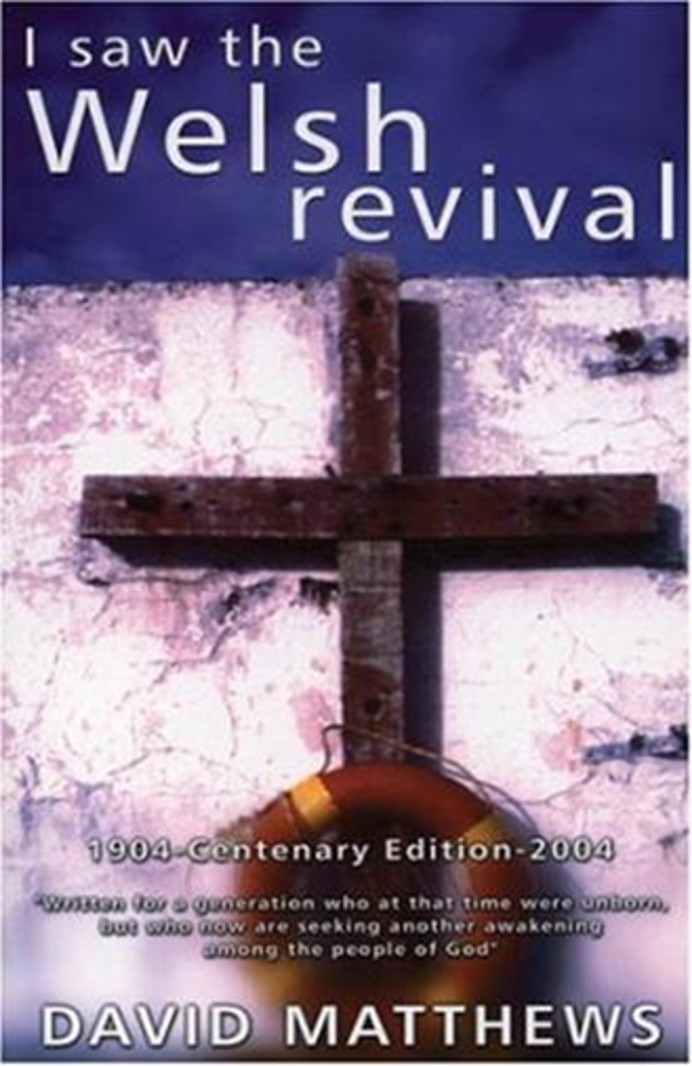 Another picture might summarise the reason for this. David Matthews was a voice and music teacher and composer, an educated man and an eye witness and convert. He describes what happened when he visited Ebenezer Congregational chapel in the Aberdare valley. He had walked off the street into the chapel because he had heard of weird happenings in the local churches. “Confronting and surrounding me was a mass of people, with faces aglow with a divine radiance, certainly not of this earth….with extended arms, a young man’s beautiful voice rang clear and reached the utmost extremity of the enormous building. He was praying and crying aloud, “Mercy! Mercy! Mercy!”…… Riotous enthusiasm broke loose when an agnostic was proclaimed to have been saved. People surrendered to what appeared to be a delirium of religious excitement. Restraint was gone. Tears and laughter were intermingled. Songs and sobs filled the air…. when I left I realised that it was 5.00am…I had been in the chapel for ten hours…”
The Context
It is the period from the middle of the 19th century in non-conformist Wales that is the context for our discussion today. We have a baseline of a kind in two documents.
In 1844 a Government Report flagged up the poor state of education in the country at this time. This was followed by an enquiry and published in 1847 as the Blue Books and often described as the Treachery of the Blue Books. They are a long, tedious and repetitive read at times but an invaluable glimpse into society at the time. It is scathing in its attack on the state of education in Wales; the tone was often derisory and the approach lacking in empathy. It caused outrage in Wales. The report also included some data about churches and their Sunday schools
In 1851 we have published the results of a unique census throughout Britain to obtain information about the number of people accommodated in the churches and places of worship and the adequacy of the provision for their spiritual needs. 57% of the population of Wales attended a place of worship (37% in England) and 87% of these were present at a chapel or meeting house
Some local examples from these two documents:
Bethel Calvinistic Methodist Church (now Welsh Presbyterian), Pembrey (1812)
The Blue Books of 1847 stated that the Sunday school had 97 scholars of which 40 could read the scriptures and there were 6 male and 4 female teachers.
The 1851 Religious Census described 250 seats used for pew rental, 30 free and space for 100 standing. The attendance figures describe an afternoon school of 280 plus 70 scholars and evening congregation of 291 plus 76 scholars.
Jerusalem Welsh Independent Chapel (1812)
The Blue Books of 1847 state that in the Sunday School there were 55 scholars (25 boys, 30 girls) under 15 years and 21 over 15 with 10 teachers (10 male, 2 female).
The 1851 Religious Census described 174 seats used for pew rental and 175 others. It suggests that the average adult attendance was 168 in the afternoon and 197 in the evening.
Bethlehem, Particular Baptist, Pwll (1834)
Blue Books – had 92 scholars of which 38 were able to read. There were 6 male teachers.
The 1851 Religious Census – Morning attendance – 61 + 40 scholars; evening – 75 + 50 scholars. (94 was the average attendance)
The Spiritual Climate
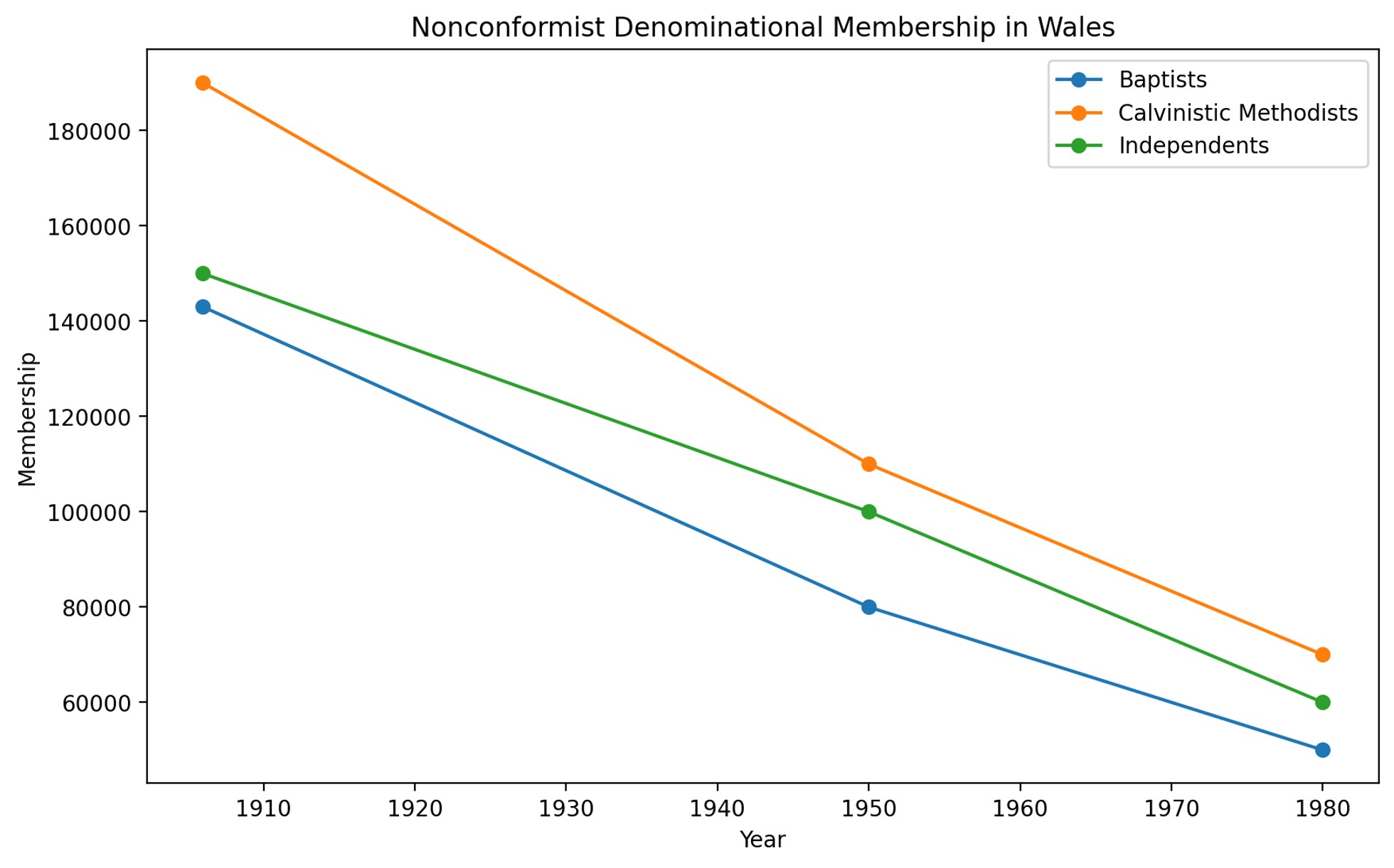
Revivalism was a regular feature of Nonconformist religion. In the 19th century there were a number of revivals – the two most notable taking place in 1859-60 and in 1882-3. In the former a Wesleyan Methodist preacher, the Rev. Humphrey Jones, returned home to Wales from America, where revival was happening, and held mission services in north Cardiganshire which led to revival meetings throughout south Wales, adding up to 100,000 to the membership of the chapels. Indeed the rise in membership of the nonconformist churches from the middle of the 19th century is quite remarkable as the chart below indicates.
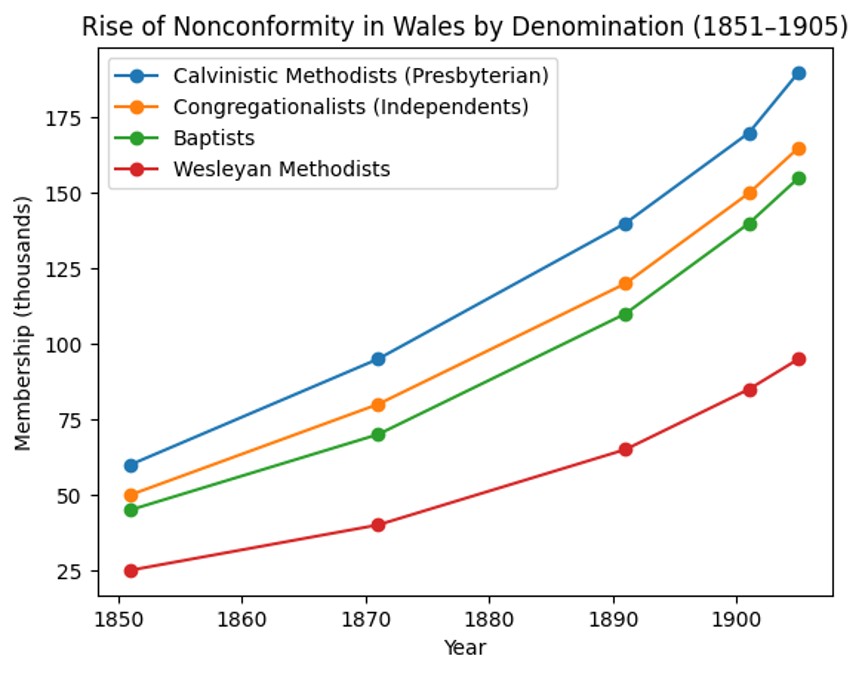 However, at the end of the nineteenth century many would argue that there was decline in the spiritual condition of Wales, although the figures not suggest a crisis. Church membership and Sunday service attendance was down with the Calvinistic Methodists in the north of the country reporting a loss of almost 13,000 members. Church leaders became aware of a kind of spiritual bankruptcy in the churches, a religious fatigue where less people attended services and prayer meetings, a decline in Bible reading and family worship. Preaching in the churches became more scholarly and instructive but less challenging lacking the past emphasis on conviction, conversion, repentance.
Eifion Evans explains how for many people in the churches such ‘seasons of refreshing’ come at a time of spiritual crisis when religion is at a premium and spirituality scarce. He emphasizes particularly the liberalizing tendencies in theology and the acceptance of the prevalent German higher criticism of the Scriptures as well as the psychological interpretation of Christian experience. The latter was to be found in the controversial ‘Varieties of Religious Experience’ by William James, published in 1902, in which religious experience is held to belong to the realm of subconscious emotional excitement. Evans suggests that by 1904 liberalism had made a significant impact upon the Christian ministry in the churches resulting in their spiritual bankruptcy. It was pointed out at the time that attendance at Sunday services was low and that there was a decline in Bible reading and family worship. Central concepts, such as conviction, conversion, repentance etc. were missing and the authority of the Bible and the fundamental truths of Christianity were weighed in the balance of reason and human opinions. The remedy was seen as “a penitent and humble pleading with God for another divine visitation in revival throughout the land”.
Yet there were church leaders and groups of people who had a hunger for revival and laid a foundation for it in their extensive prayer meetings and prayer cells across many countries. In 1902 Dean of St. David’s Cathedral David Howell declared that the chief need of his country was a spiritual revival through the outpouring of the Holy Spirit. Indeed, there was sporadic and spontaneous prayer in remote country hamlets, in mining villages where individuals would be inspired to pray that the Holy Spirit might be poured out. It was not organised nationally but local prayer circles arose which eventually became the preparation for the coming revival. The churches began to believe there was something in the air.
Also Keswick Conventions were popular in England for the deepening of the spiritual life and a similar event in Llandrindod Wells with speaker Dr. F.B. Meyer moved many pastors to pray for a religious awakening and organise missions across the country. Many would suggest that the Keswick experience was the spark for the revival. In addition, there were evangelists travelling around the country: for example, John Pugh and Seth Joshua as part of the ‘Forward Movement’, an evangelistic movement of the Calvinistic Methodist Church.
A STIRRING
Things were stirring in Wales and also in other countries. Jessie Penn-Lewis emphasises a kind of preparation for an outpouring of the Spirit in other countries from around 1898. Long before Evan Roberts received his call revival meetings were held near Bridgend, Aberdare, Gilfach Goch, Ammanford, Newport as well as locations in North Wales. People were praying for revival; there were conventions in villages and towns which were held to deepen the spiritual life of the churches. There was a growing pattern of extraordinary occurrences and the testimonies of those involved had some remarkable visionary descriptions.
The testimonies of some of the people in Loughor indicate that the Revival did not spring out of nothing – Rhys Penry said: “Although things were blooming in our church I was not satisfied with my moral and spiritual state – I wanted to be better”. People who were converted in 1859 were sharing their faith with groups of young people; new churches had been built before the 1904 Revival to meet growing numbers of worshippers. There were significant people such as Seth Joshua and Joseph Jenkins. Seth Joshua, an evangelist with the Calvinistic Methodists. He had prayed for the raising up of a revivalist not from Oxford or Cambridge but from the Plough or the Coal Pit. Joseph Jenkins, New Quay minister, spent hours of heart searching and a longing for something he couldn’t name.
SEMINAL MOMENT 1
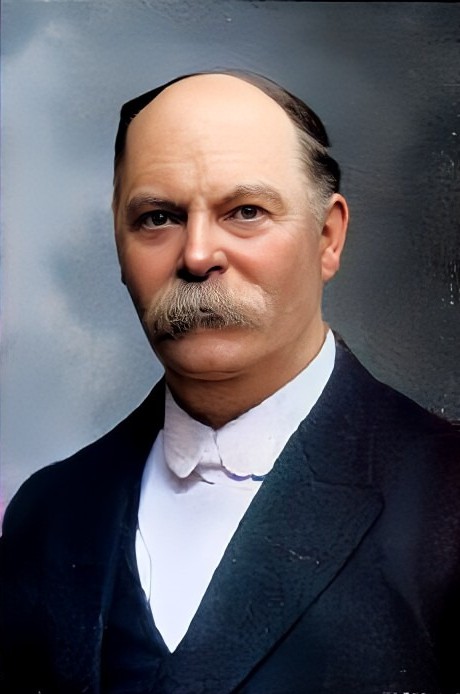
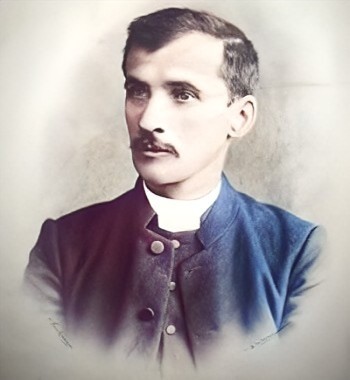
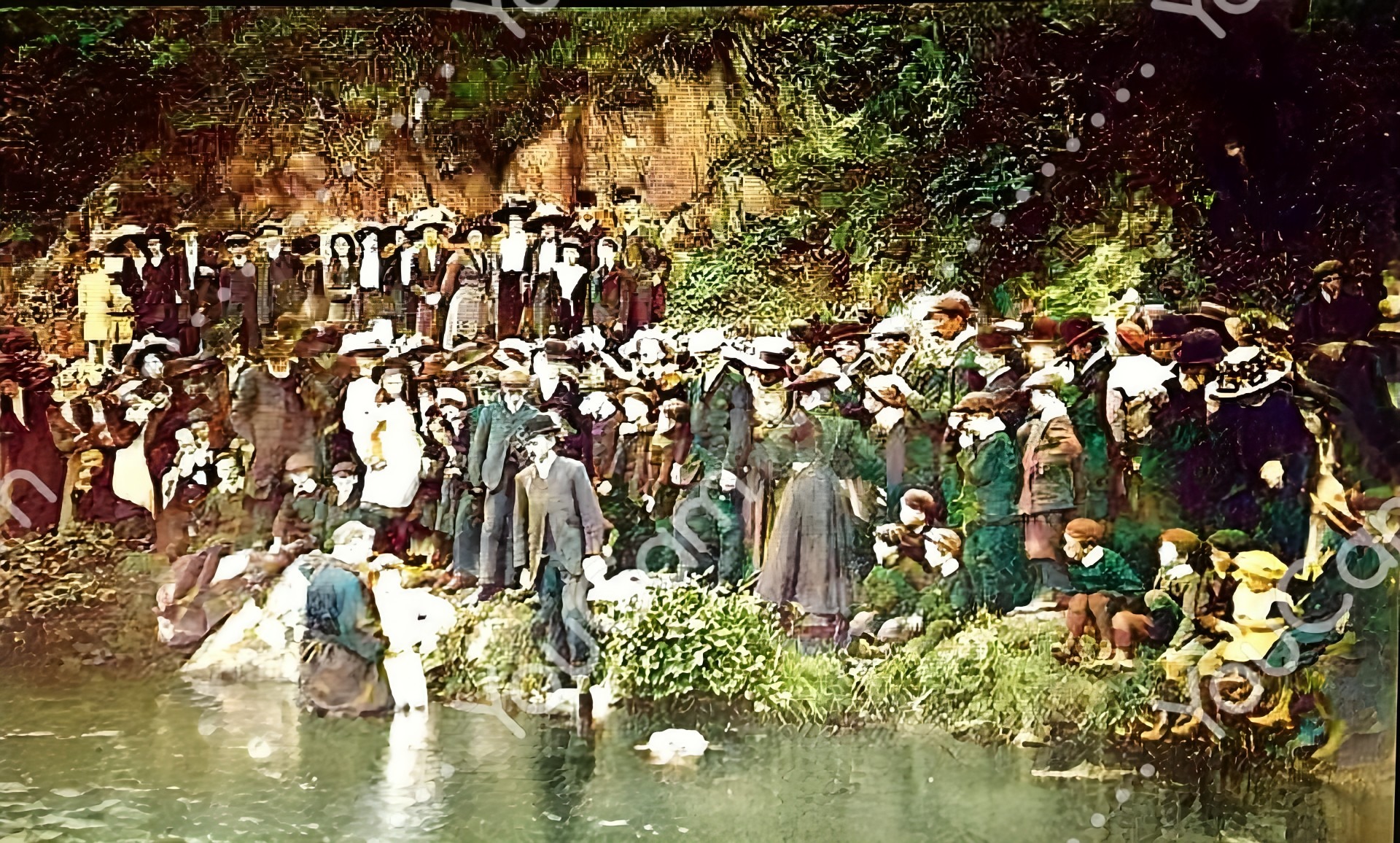
A seminal moment took place in Tabernacle Calvinistic Methodist Chapel, New Quay, Cardiganshire in February 1904. The pastor, Rev. Joseph Jenkins, had been praying for the young people in the church and one Sunday, in response to his question “What does Jesus Christ mean to you” Florrie Evans, who had been converted two weeks previously, stood up and publicly confessed: “I love the Lord Jesus with all my heart.” The effect was electric – a powerful awareness of God’s presence and a desire to share the blessing with other local churches. The numbers of young people attending grew and the movement spread to other west Wales chapels. In Christian Endeavour meetings mainly young girls were breaking out in praise to God and people were travelling three or four miles to experience the events.
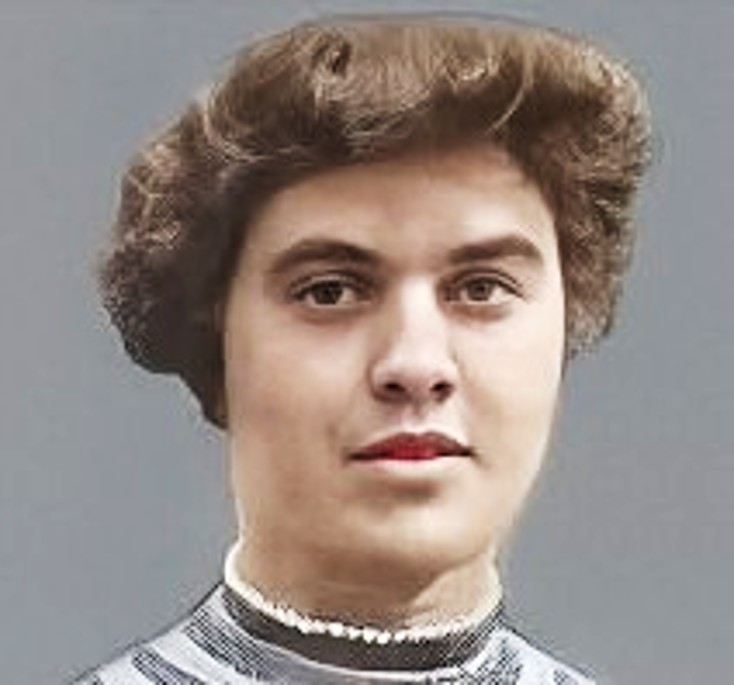
Kevin Adams quotes from a letter written by Joseph Jenkins: “The spirit of God has fallen on our young people. I am unable to do anything. I am in the middle of the sound of the wind. God Himself is here. I have never seen anything like it before. Twenty year old girls are prophesying”. Adams says that this was not a precursor to revival but revival itself. The Revival had begun.
In September 1904 Seth Joshua visited the church of Joseph Jenkins in Newquay and wrote over a few days in his diary: “I have never seen the power of the Holy Spirit so powerfully manifested among the people as at this place just now . . . It was easy to preach today.” “Revival is breaking out here in greater power. Many souls are receiving full assurance of salvation …..the young are receiving the greatest measure of blessing. They break out into prayer, praise, testimony and exhortation in a wonderful way.” He recounts how services went on until the early hours and forty conversions took place. Others were seeking assurance having been converted previously.
Seth Joshua also visited Newcastle-Emlyn, a preparatory school for Trefeca College and the Presbyterian Ministry, where he became discouraged at the lack of enthusiasm and assurance. But when later some young people came from New Quay to talk to the students “….the Holy Spirit led them. The fire burned all before it. Souls were melted and many cried out for salvation.”
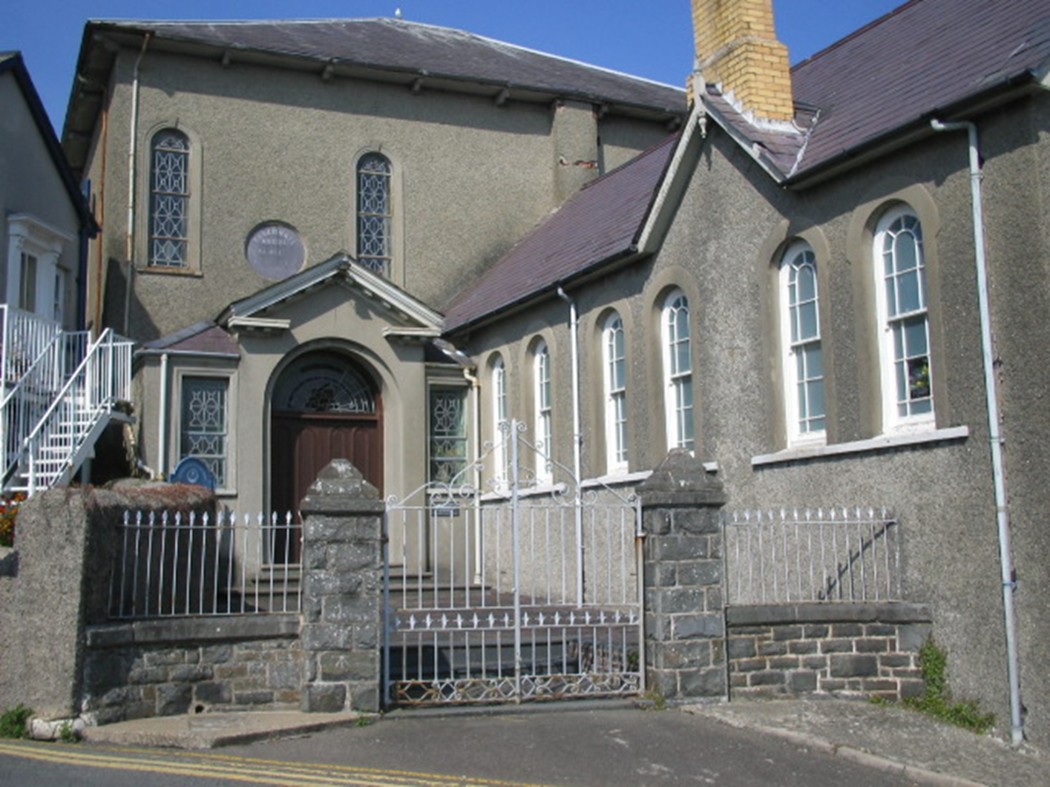
For more about Florrie Evans see the end of the article.
SEMINAL MOMENT 2
It was at a conference at Blaenannerch, Aberporth, 8 miles away from Newcastle Emlyn, that Joshua and Jenkins met up with the young man who was to become central in the Revival. Evan Roberts was 26 years of age and a former coal miner born into a devout Welsh Calvinistic Methodist family. Roberts had been praying for revival and was preparing for the ministry when he experienced, on a regular basis, extraordinary experiences of communion with God which kept him awake most nights.
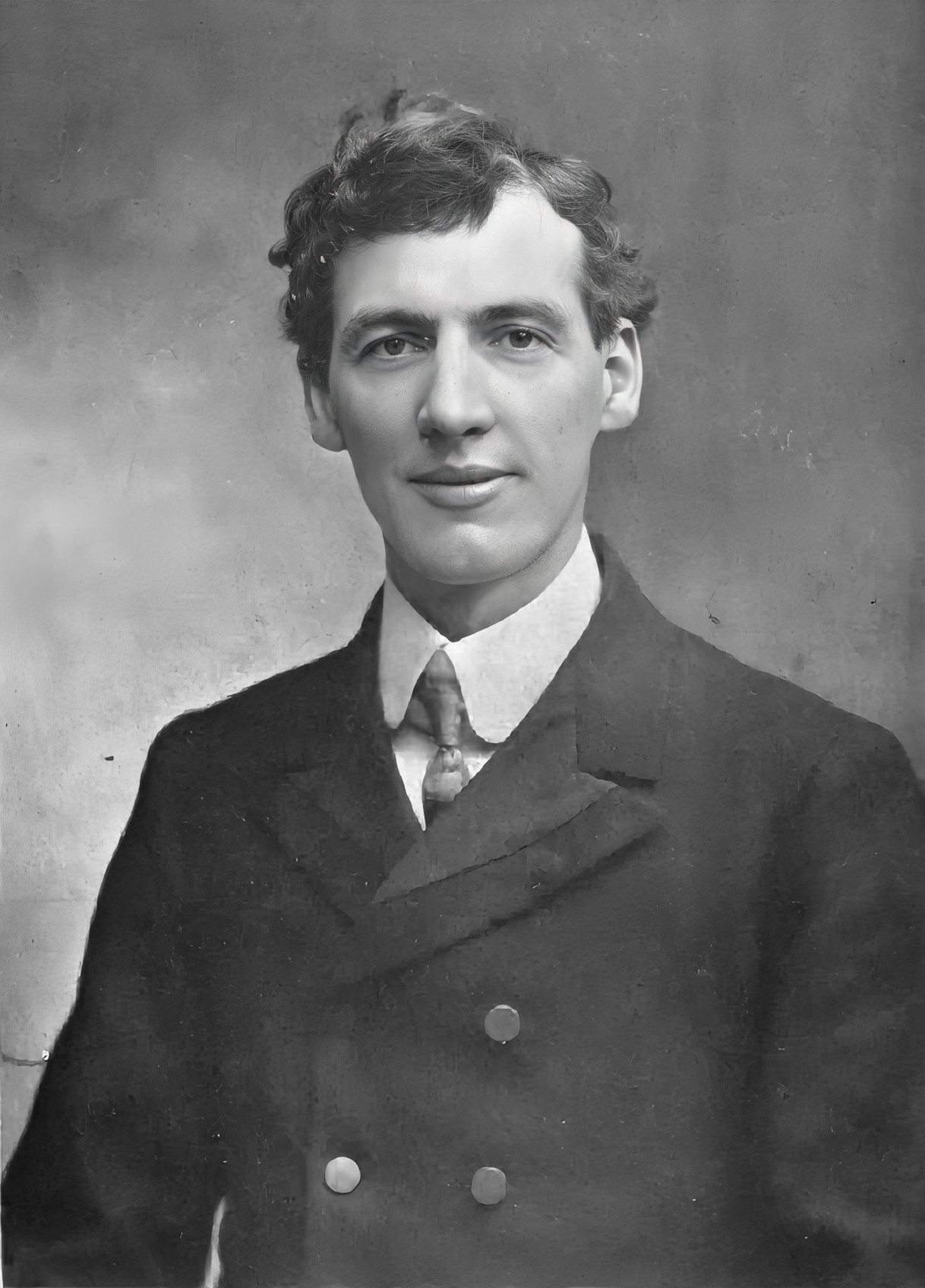
On Thursday, September 29th, Evan Roberts and a group of students attended a meeting at the Blaenannerch conference. DM Phillips describes what took place. Evan had felt confused on the journey – joyous, gloomy, hard. According to Roberts. “I felt in going to the meeting that I was compelled to pray. When the meeting commenced many prayed, and I asked the Holy Spirit, ” Shall I pray now?” ” No,” said the Spirit in answer. Shortly some wonderful influence came over me. After many had prayed I felt some living energy or force entering my bosom, it held my breath, my legs trembled terribly; this living energy increased and increased as one after the other prayed until it nearly burst me, and as each finished I asked “Shall I pray now?” When someone finished, I prayed. My bosom boiled all through, and had it not been that I prayed, I would have burst. What boiled my bosom? The verse, “for God commendeth His love.” I fell on my knees, with my arms outstretched on the seat before me, the perspiration poured down my face and my tears streamed quickly until I thought that the blood came out. Soon Mrs. Davies, Mona, New Quay, came to wipe my perspiration. ……….I cried: ” Bend me, bend me, bend us ….. ” It was God commending His love that bent me, and I not seeing anything in Him to commend. After I was bent, a wave of peace filled my bosom. When I was in this feeling the audience sang heartily:” I am coming, Lord! Coming now to Thee!”
Phillips writes: “This is the wonderful history of how Evan Roberts was filled with the Spirit. In this meeting, in a simple and unostentatious country place, the longing for being filled with the Holy Spirit which had been growing in him for thirteen years, reached its maturity. The hour of his preparation to receive the Spirit with power, and the hour of God had come; and behold, the mighty outpouring descended on him”.
Afterwards Roberts describes how he was filled with sympathy for the people who will have to bend in the judgment day, and he wept. He felt on fire to travel throughout Wales “to tell the people about the Saviour”. Blaenannerch was the beginning of a great adventure which changed the spiritual face of Wales. Unable to settle down to his studies in Newcastle Emlyn Roberts began to gather together a team to visit towns and villages to take the message of the gospel. On the team was Sydney Evans and the young women of Newquay. First, they spent time in Bible reading and prayer and weeping. Evans continued to have visions of how the kingdom of God would be extended, including the vision of 100,000 people to be won for Christ. The emphases of his future ministry were: obedience to the leading of the Holy Spirit; confession and restitution with the full assurance of faith; the priority of prayer; the pre-eminence of Christ in all things.
SEMINAL MOMENT 3
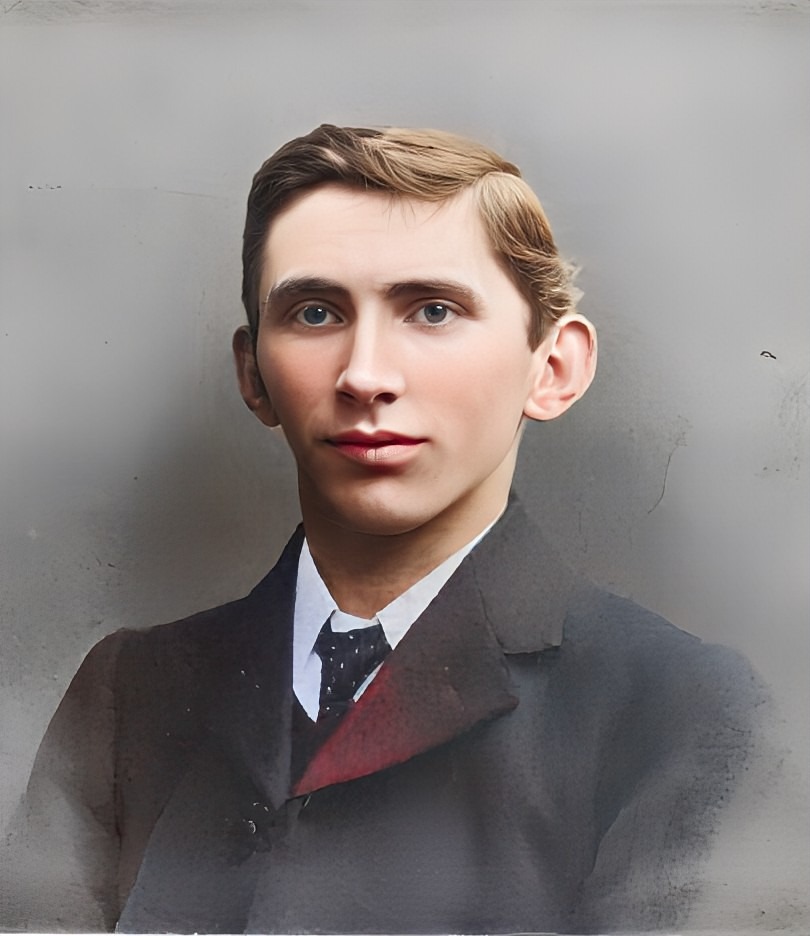
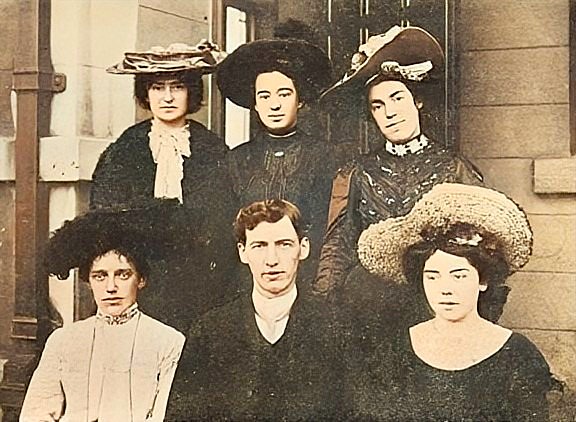
In October 1904 Evan Roberts he began to think seriously about his home church at Loughor and the young people there. He believed that they were reticent in prayer, ignorant of the Holy Spirit and lacking in peace, joy, assurance of forgiveness and power. He determined to return home for a week of meetings among the people of his church in Loughor. He had been moved by the kind of visions he had received which included the awful reality of hell, the victory of Christ over the devil, the prince of this world rejoicing in his despondency, the moon with a great brilliance reflecting the divine presence and stretching an arm out towards the world. The vision which confirmed his call to return to his hometown involved rows of his old friends and the young people in the school room and felt called to ‘go and speak to these people’. His family were concerned about his mental stability in the light of his excited laughter in the spirit and his uncontrolled weeping over the state of the country. Yet many of the young people were baptized in the Holy Spirit and this was the beginning of a series of remarkable experiences and a journey through many towns and villages of Wales.
Newspaper Reports
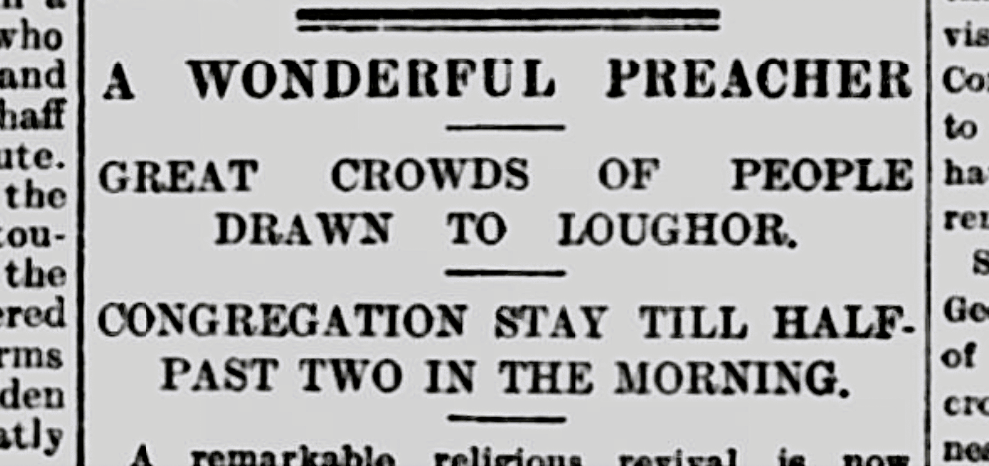 A number of newspapers, and especially the Western Mail and South Wales Daily News, followed the events of the 1904 revival in some detail. It has been called by some a ‘newspaper revival’ since newspapers played a significant role in shaping how the Welsh Revival was perceived. The view is that the coverage was balanced – sympathetic, enthusiastic but also critical and sceptical. Although in fact a number of evangelists had been active in missions in the spring of 1904 and countless church leaders had spread the revival spirit, it was Evan Roberts who captured the imagination of the press and the attention of the public. Perhaps he was different from the formality of the professional minister; he was a prophet rather than a performer;
The first account from the Western Mail, on 11th November 1904, is worth reading in part since it provides a perspective from outside the church context. It also indicates the pattern of what happened in most of the other meetings of the revival. I summarise it below in italics.
The meetings, held every night at Loughor Calvinistic Methodist church, were attended by dense crowds and each of them continued well into the early hours of the next morning. Led by Evan Roberts who was described moving the whole community by his remarkable utterances, and scores of people who had never attended church were making public confessions of faith. The revival was on everyone’s tongue -colliers, tinplate workers, shopkeeper, merchants, and all classes of the community came to listen to the words declared to be revealed to Roberts by the Holy Spirit.
In Gorseinon 400 people packed the chapel and the meeting did not follow a traditional set order of proceedings. Everything was left to spontaneous impulses – a young woman rose to give out a hymn which was sung with earnestness; a young man read a portion of scripture; from the gallery came an impassioned prayer from a woman crying aloud that she had repented and was determined to live a better life. While this was happening Evan Roberts went in and out among the congregation Bible in hand offering kindly words of advice to kneeling penitents. He often shared visions he had experienced and sometimes the whole congregation fell upon the knees praying with Mr. Roberts giving way to tears at the sight.
The Revival Spreads
Following the intense activity at Loughor the revival meetings spread out from that immediate area into the rest of Wales and eventually into England. Reverend Dr. George Campbell Morgan was an early witness of what was happening in the meetings. “Meetings were characterized by a perpetual series of interruptions and disorderliness. ……characterized by a great continuity and an absolute order. What did he mean? “ I have never seen anything like it in my life; while a man praying is disturbed by the breaking out of song, there is no sense of disorder, and the prayer merges into song, and back into testimony, and back again into song for hour after hour, without guidance.
ACTIVITY IN PEMBREY AND BURRY PORT
Bethany Calvinistic Methodist Church, New Street, Burry Port
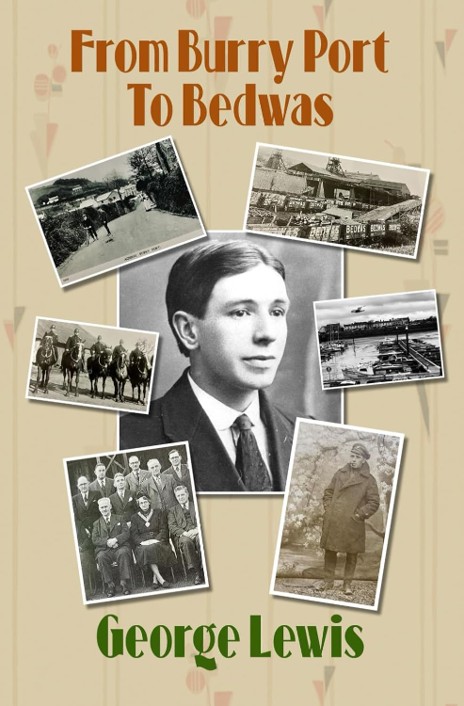 George Lewis in his autobiography ‘From Burry Port to Bedwas’ gives some insight into the impact of the 1904 revival in relation to the chapel he attended in Burry Port – Bethany Calvinistic Methodist in New Street. He was 14 years of age at the time. He describes a strange effect that it had on some people who had never spoken a word in chapel, but now were praying and taking part in the services which went on for hours. He recalled that after they left the chapels they would keep on singing and repeating Diolch Iddo – ‘thanks be to him’. Indeed, the services were mainly prayers, hymns and confessions and not sermons. The effects spilled over into the mines where it was not uncommon to see someone go down on their knees to pray and for groups to sing a popular him. He mentions one collier “who was the biggest boozer ever, who had come under this religious spell. I never heard anybody pray like him, the fluency of his words being better than many a professional minister”.
A number of examples are given by George Lewis of the impact of the revival meetings upon people in the community. The public houses were practically empty and many of the publicans attended the meetings where the pattern used by Evan Roberts (although he was not present) was followed – prayers, singing of hymns and testimonies of conversions. Some of the effects seemed to a 14-year-old George quite odd. Two brothers in the chapel were particularly touched and in the big seat sent imaginary telephone messages to heaven on their knees. A neighbour would go down the cellar most of the day singing quietly Dros bechadur luost farw – ‘For a sinner thou hast died’ which resulted in her husband seeking some peace in his mother’s house. Another neighbour tried to fly to heaven from the top of her garden hedge but landed in a ditch. However, Lewis at his young age agreed that it was the work of the Holy Spirit and that “it was a wonderful experience for me to witness and the result, a good number were saved and converted and a good number went back to their evil ways”.
The Welshman also has a piece in December 1905 describing the continued enthusiasm in the church.
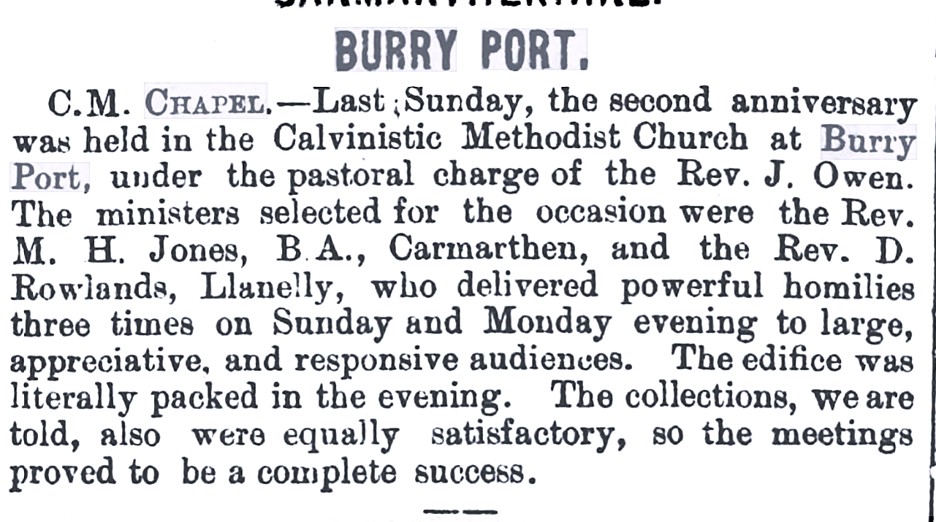
Tabernacle Welsh Baptist Chapel, Seaview Terrace
On 27th January 1905, Seren Cymru newspaper reported that “There is no noise or tumult here, and if that is what Revival is it has not yet reached us; but the spirit of prayer has taken complete possession of the church. We have been holding prayer meetings almost every evening for over two months, and the Holy Spirit is present in all of them. The sisters also hold meetings among themselves. During the last six weeks, 49 were added by baptism and 10 from the country of backsliding.
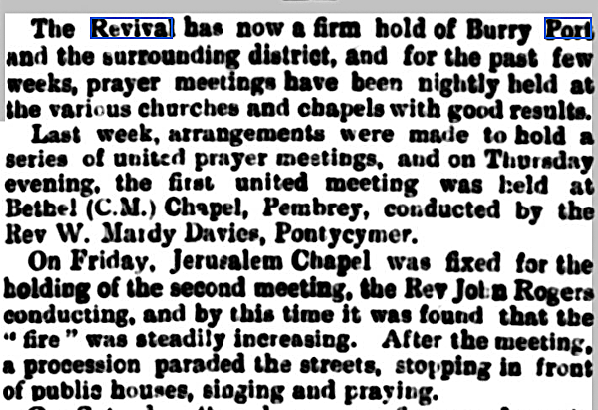
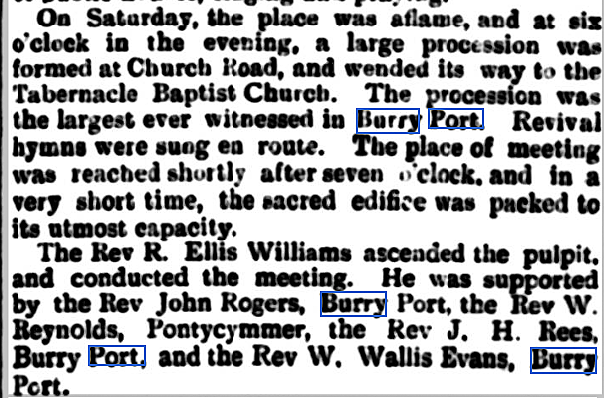
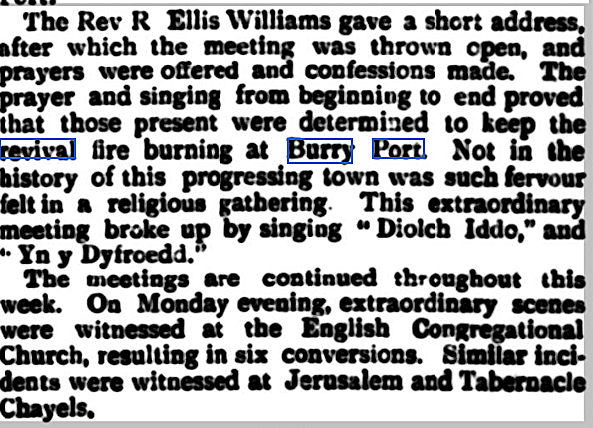
The Evening Express of 25th February 1905 reported that prayer meetings were held nightly at most of the places of worship in Burry Port and Pembrey. Much activity in the town seemed to have taken place at Tabernacle Welsh Baptist Chapel in Sea View Terrace, Burry Port. The account suggested that the revival had taken “deep root” in the church and recently twenty converts were baptised by the pastor, Rev R. Ellis Williams, and that “the church was packed and the service was very impressive”. The impact of the revival continued throughout the year with 20 baptisms carried out at Tabernacle in December 1905 by Rev. R.E. Williams and 100 additions made to the church over the last three months. (Welshman 15th December 1905).
In the Evening Express and Evening Mail of June 21, 1905 the church anniversary was led by Rev. D. Charles of Bangor and T. Jones of Llanelli with “satisfactory preaching and collections”. It is reported that the “aftermath of the revival seems to be ripe at Burry Port already” and a further meeting was held after the service on Sunday night at the Calvinistic Methodist church under the leadership of the deacons assisted by the minister in charge for the day, the Rev. J.B. Thomas of Carmarthen. People shared their experiences with the congregation, revival hymns were sung and with “Miss Peregrine playing in splendid form all day”.
Here are some reports from the Llanelly Mercury on 5th January 1905.
Jerusalem Welsh Independent – Burry Port
In his Annual Report for 1905 Rev. John Rogers said that it had been “The year we saw the work of the right hand of the Lord”. “Many have returned to the faith and many have been revived. We heard the mutants speak and the quiet people sing with the multitudes creating time to hear the Word”.
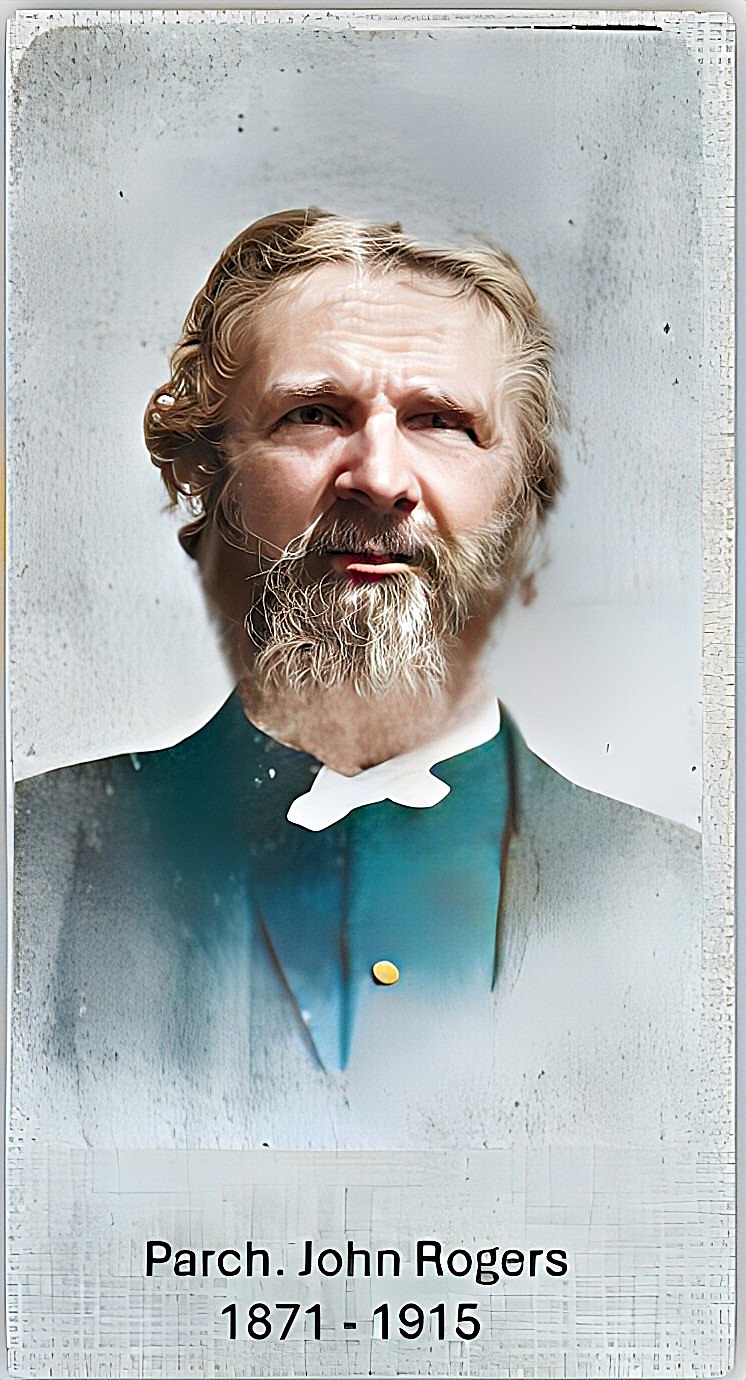 “The Vestry was full during the Prayer Meetings, and the people demonstrated conviction in their prayers and in their singing. At the end of 1903 the membership of Jerusalem Chapel was 502 and by the end of 1905 this had expanded to 602. One hundred new individuals became members during these two years. So many were keen to become members at the beginning of 1904 that it was impossible to ordain them all at one Communion service. Therefore, 35 were ordained as members on the last Sunday of 1904 and 65 of the new people were ordained at the following Communion.
It was on educational ministry that John Rogers had placed emphasis for 33 years before this, through the Sunday School, the Library, the Band of Hope, the Choirs, and the Cultural Societies at Jerusalem Chapel. Amid the power of the revival and its gentle waves, the church choir — with over 160 members — continued to rehearse classical masterpieces.
These are the remarkable statistics of Jerusalem Sunday School in 1905.
616 Names on the books of the Sunday School
250 of the followers were boys and men
306 young girls and women of a mature age
27 Male Sunday School Teachers
28 Female Sunday School Teachers
The Sunday School was open on 46 Sundays during the year
The highest attendance figure was 390
The lowest attendance figure was 190
There were 52 Sunday School Classes in total
28 classes for the under 15 year old pupils
24 classes for the over 15 year old pupils studying the words of the Bible with maturity.
Bethlehem Baptist Chapel, Pwll
35 had been baptised — South Wales Daily Post reported on 12th January 1905
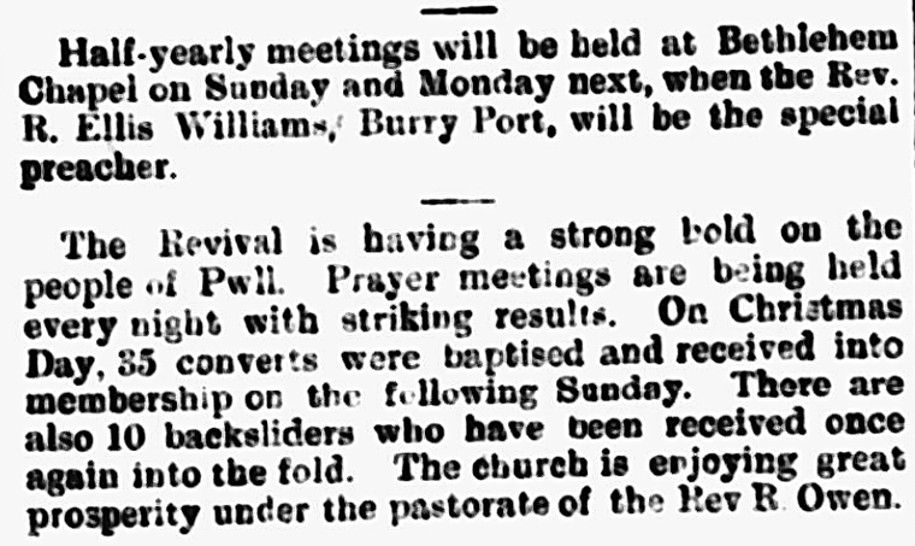
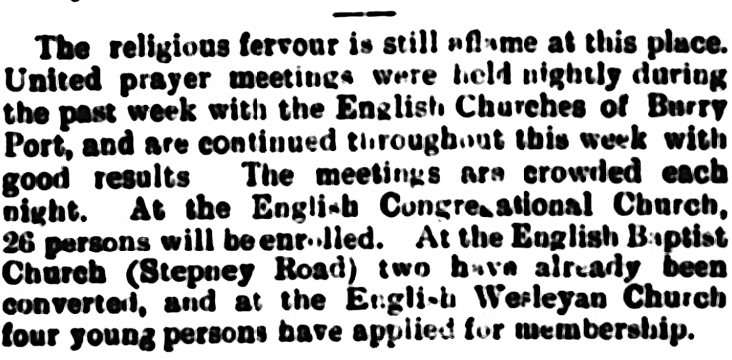
There were also some English speaking churches in which people were converted. See the newspaper cutting below.
CONVERSION TABLES
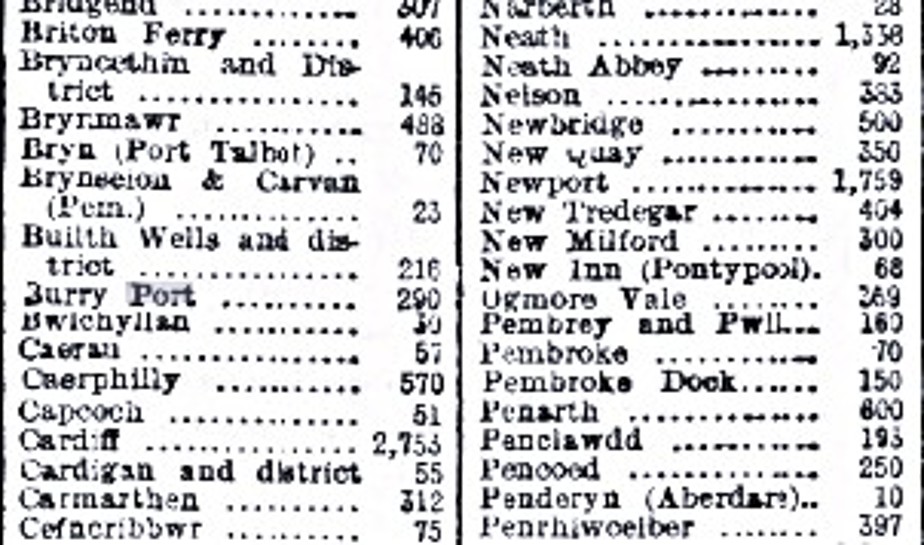
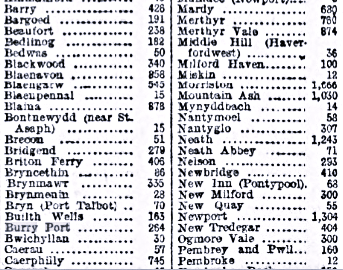
Other newspaper accounts at the time provided some indication of numbers who were converted as a result of the meetings, although numbers and dates varied between papers. Here are some which included Burry Port and Pembrey.
Effects and Legacy of the Revival
- A remarkable 100,000 people were reported to have been converted during the two years.
- Theologically and in worship and Christian living there was a refocusing on the Holy Spirit. People were urged to receive the Spirit or be baptised in the Spirit in addition to believing. Worship was transformed from the more traditional formality, routine and even coldness to energy, fervour and spontaneity in prayer and singing.
- There was a liberation of the role of women. The revival played huge part in challenging traditional gender roles. Karen Lowe (Antioch Church) in her book Carriers of the Fire emphasises this: It was a grassroots movement where women, young people and children found their voice. The old notion of separate spheres was challenged in the revival as men and women work together in teams. Women now spoke in public, wrote pamphlets and organised events. This came as a shock to many people.
- There were reports of improvements in behaviour and public life – reduced drunkenness and gambling; accelerated the decline of alcohol consumption. In Glamorgan, convictions for drunkenness plummeted from 10,528 in 1903 to 5,490 in 1906. It was similar elsewhere.
- The Revival led to a reduction in aggregate crime by 15% and this persisted for a few years. Friends restored relationships, husbands returned to their wives, thieves returned what they had stolen, the pubs were largely empty, An often repeated story claimed that pit ponies in coal mines had to relearn commands because miners stopped swearing at them. However, not a sustained social reform but a lasting moral and cultural shift in Wales
- New religious denominations – the birth of the Apostolic Church, officially formed in 1916 and now a worldwide Pentecostal movement, grew out of the Welsh Revival, founded by converts of the Revival. (notably D.P. Williams); and the founder of the Elim Church, George Jeffreys, was converted in the Revival.
- Worldwide movements – The outcome was seen as the inspiration of similar movements in the United States, Korea, India, and parts of Africa. Revival pilgrims came from France, Holland, Germany, Switzerland, Norway, Denmark, Russia and that these pilgrims were inspired to facilitate the spiritual awakenings in their own countries.
Critics of the Revival
- Emotional and Disorderly. People claimed the meetings were too emotional and chaotic, lacking theological depth. Spontaneous singing, shouting, and testimonies rather than structured preaching. A huge emphasis on singing and weak on theological understanding of what was taking place.
- Influence of Evan Roberts Too much focus was placed on Roberts as a personality. His leadership was mystical and excessively emotional. No stable ministry. Rev Peter Price from Dowlais – a sham revival, a mockery, a blasphemous travesty of the real thing. In this mockery we see Evan Roberts acting as if he were God himself, leading the Holy Spirit ss opposed to being led by the Spirit. There were certainly concerns about his mental health. At times he behaved manically, at other times he was dismissive and depressive. He had numerous breakdowns.
- Short-Term Conversions Many conversions were temporary because it was emotional without a real commitment. People did not remain active for any length of time and a few years later there was a dramatic decline in church membership. The revival’s social impact has been exaggerated.
- Psychological Concerns A few critics believed the revival produced mass hysteria or psychological pressure. People fainting or crying uncontrollably and social pressure to publicly confess sins.
- Criticism from Later Historians Historians sometimes argue that the revival’s social impact has been exaggerated. Wales continued to become more secularized in the rest of the century and there was a decline in church attendance and membership. Things went back to traditional Nonconformist services, chapel attendance began to dwindle. Following the Revival, women were not permitted to undertake leadership roles.
 An EVALUATION from Rev. Dr. Vyrnwy Morgan
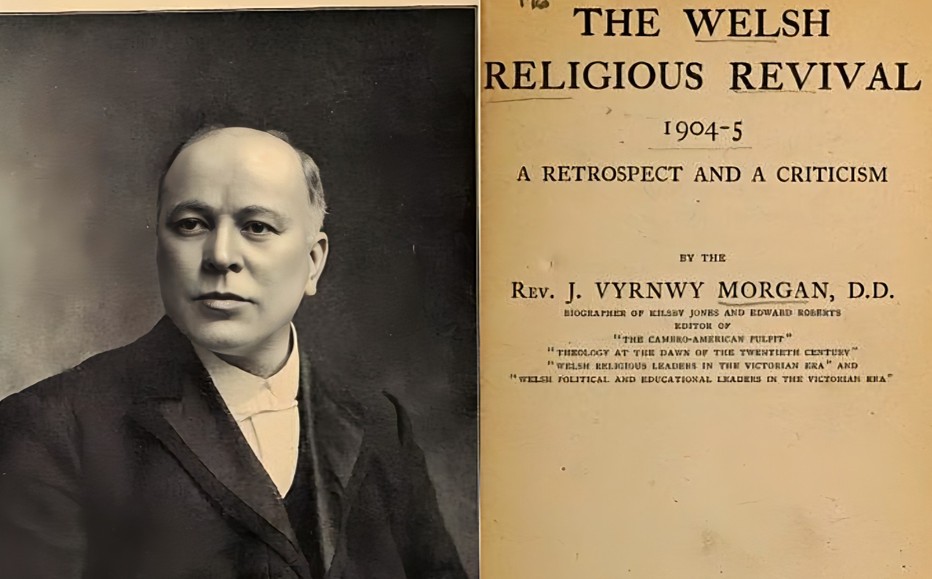
He was a Welsh Congregationalist minister, author and academic. In 1909 he wrote a critical analysis of the revival. It was an early evaluation but informative and discerning. I leave it with you as something for debate.
He argues that the Revival touched the consciences, change the lives and arrested the attention of thousands of people, but despite the increase in membership and Sunday schools in 1904 and 1905 there was a similar decrease in 1906 and 1907. The National Life of Wales is now tainted by religious discouragements, disregard of truth, lack of intellectual integrity, the supremacy of the political over the spiritual and a deplorable change in the attitude of people towards the Bible.
It was based on the misconception of conversion which mistakes the first impulse for the accomplished thing. Whereas Wesley’s revival brought about a great moral revolution, and the efforts of Howell Harris and Daniel Rowland in the revival of the 18th century brought about intellectual, educational and religious benefits, what religious, charitable or philanthropic institutions exists now in Wales as a result of the 1904-5 revival? As an old deacon told the members of a certain church in the Rhondda Valley at a church-meeting, “Well, brothers and sisters, we have had a high time; but I am sorry we have but little to distribute in the way of dividend,”
He argued that the people of the revival turned to more social and political answers for meaning in life. But there was one indisputable service that the Revival rendered – it brought the conviction home to the people, something they already knew but had not grasped – that there is a rich spiritual life that may be revealed and utilized for the enriching of the individual character and the upbuilding of the Heavenly Kingdom.
What’s your view?
MORE ABOUT FLORRIE EVANS
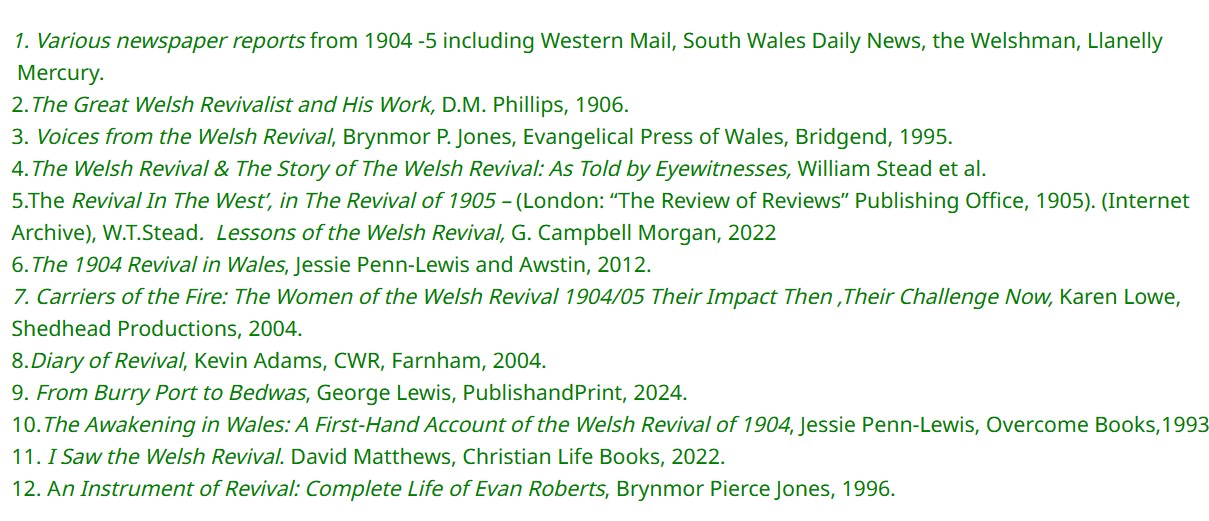
Main Sources
Primary, contemporary and containing eye-witness accounts, some only available digitally archived with recommended secondary sources.
GRAHAM DAVIES and ELLEN DAVIES April 2026